
CARINTHIA BLOG
HOW TO STORE YOUR SLEEPING BAG PROPERLY
Why proper storage is crucial
Whether on an alpine bivouac, on military missions or on multi-day trekking tours – a sleeping bag is an indispensable piece of kit. However, its performance depends not only on the materials and construction, but also on proper care and storage.
All too often, users make the same mistake: leaving the sleeping bag permanently compressed in its stuff sack after use. What may seem practical in the short term leads to a noticeable decline in performance over the long term. Insulation materials lose their loft, moisture can become trapped, and the lifespan is reduced.
In this article, we show you how to store sleeping bags properly – and why these details are crucial for thermal performance and reliability in use. Storing your sleeping bag correctly.
The basics: How insulation works
The insulating effect of a sleeping bag is based on trapped air. Whether it’s down or synthetic fibre – the key factor is what is known as ‘loft’. Only when the material can expand to its full volume does an effective layer of warmth form.
Prolonged compression impairs the insulating structure of fibres or down. They can lose their loft, clump together and consequently trap significantly less air. This reduces thermal performance – precisely when reliable insulation is most important. Storing a down sleeping bag correctly.
THE STORY BEHIND G-LOFT®
::Common mistakes when storing sleeping bags
Constant compression in the pack sack
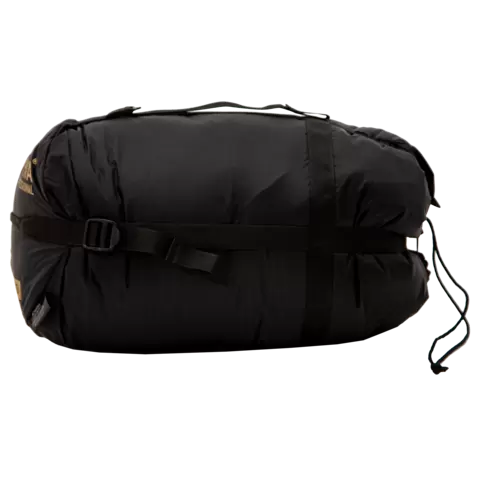
The most common problem is storing the sleeping bag in its compression bag after use. This bag is intended solely for transport – not for storage.Consequences:
- Loss of loft
- Permanent material fatigue
- Reduced insulation performance
Storage in damp conditions
After trips, residual moisture often remains in the sleeping bag – due to condensation, sweat or external factors.Consequences:
- Odour build-up
- Potential mould growth
- Damage to the material
Storing your sleeping bag properly: How to keep it in good condition
The best way to store a sleeping bag follows a clear principle: maintain its volume, keep it dry, and take the strain off the material.
Do not store the sleeping bag in a permanently compressed state
The compression bag is intended for transport – not for long-term storage. It is designed to minimise the volume required for transport. This involves compressing the contents heavily – which is precisely what must be avoided in the long term.Why this is a cause for concern:
- Constant pressure puts strain on the fibre structure
- Down can clump together and lose its loft
- Synthetic fibres can lose their elasticity
The correct approach:
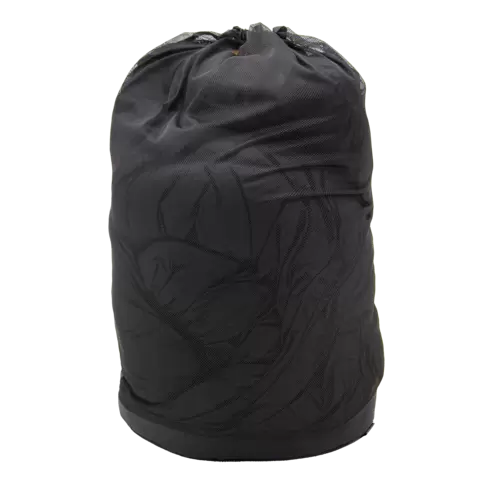
- Use a large, breathable storage bag ✔
- Alternatively: store it loosely hung up (e.g. in a wardrobe) ✔
- Or: spread out on a shelf ✔
|
HOW TO PACK YOUR SLEEPING BAG PROPERLY INTO A COMPRESSION BAG
Drying before storage
Moisture builds up during almost every use – even in seemingly dry conditions. Even condensation inside the tent and minimal body moisture are enough to leave some moisture in the sleeping bag.
Typical sources of moisture are:
- Condensation inside the tent
- Body moisture (sweat)
- Environmental factors such as mist or snow
The correct approach:
- Unpack your sleeping bag immediately after your trip ✔
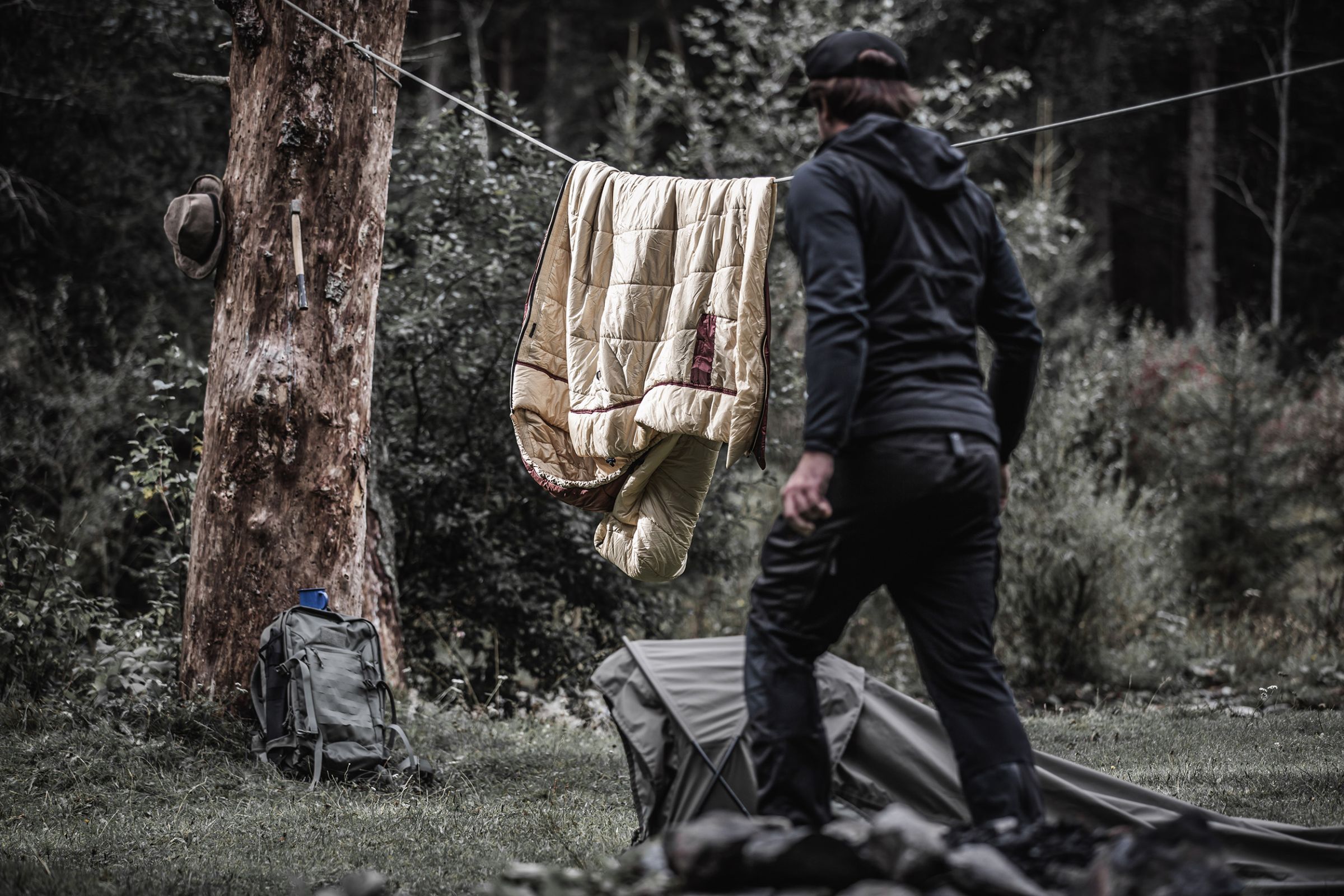
- Lay it out completely flat or hang it up ✔
- Leave it to dry in a well-ventilated room ✔
|
Breathable/ventilated storage
The materials in a sleeping bag are constantly reacting to their surroundings. Adequate air circulation is therefore important. If the sleeping bag is stored in a plastic box or an airtight bag, trapped moisture can create a microclimate.
Why this is a cause for concern:
- Air cannot circulate
- Residual moisture remains trapped
- The microclimate encourages material degradation and odours
The correct approach:
- Cotton or mesh storage bags ✔
- Open storage in a cupboard ✔
- Rooms with natural air circulation ✔
Correct storage location
The choice of storage location has long-term implications, but is often overlooked.
Suitable conditions:
- dry indoor air
- constant temperatures
- no extreme fluctuations
The following are unsuitable:
- damp cellars (high humidity)
- hot attics (stress on the material)
- rooms with significant temperature fluctuations
Regular loosening and aeration
Even if the sleeping bag is stored for a long period, it is advisable to check it from time to time. This ensures it remains ready for use at all times.
Recommended:
- Shake it out occasionally to loosen the filling
- Air it out briefly to remove any residual moisture
Cleanliness before storage
During use, dirt, skin oils and sweat build up in the fabric. Proper cleaning helps to maintain the functionality of the materials and the effectiveness of the insulation in the long term.
Before storage:
- Clean the sleeping bag if necessary (see care label)
- Always allow it to dry completely
- Do not store dirty or damp sleeping bags
|
Key points:
- Do not store whilst compressed for long periods
- Allow to dry completely before storing
- Choose breathable, spacious storage
- Use a suitable storage location
- Air and fluff up regularly
Following these basic rules will not only preserve your sleeping bag’s performance, but also ensure its safety and reliability when in use.
Written by the Carinthia product experts from Carinthia.